Below is our finished music video

My Outside Digipak Panels

My Outside Digipak Panels

My Inside Digipak Panels

My Inside Digipak Panels

Please click the image below to view our finished website

Monday, 29 January 2018

Evaluation Question 1: In what ways does your media product use, develop or challenge forms and conventions of real media products?

Our media product, i.e. the music video, album cover and website, both develops and challenges the forms and conventions of existing media products. We chose to take inspiration from predominantly R&B websites and albums and in turn combined all the conventions we saw in them and used them to create our own website and album cover which could conform to the genre conventions. For our music video we followed the forms and conventions of contemporary R&B videos, such as 'Miss Independent' by Ne-Yo, and then developed this by having a lead who challenged the usual convention of the lead artist being smooth.

Our Music Video

The purpose of a music video is to promote a newly released track from an artist and this can be done through three forms- Narrative, Performance and Conceptual:


We applied this theory by having a performance and narrative driven music video, in turn combining the elements from each form.

Music Video- Narrative

The narrative of our music video is quite simple; it shows the artist AJ looking back at his past relationship with his ex-girlfriend which ended due to her cheating on him with another man. The music video shows the stages of the relationship and is an expression of the emotions he felt and how he intends to move on.

One of the aspects of Carol Vernallis' theory is that the narrative structure of a music video may be disjointed and fragmented through the use of discontinuous editing. We decided to conform to this theory by placing in short narrative scenes/sequences in between performance shots (lip syncs and dance). The theory of a fragmented narrative is quite common in the R&B genre where music videos usually play around with the narrative around their performance shots. An example of an existing R&B music video which conforms to this theory can be seen below along with examples from our music video of how we conformed to it:


Music Video- Performance

As is the norm for the R&B genre, our music video is predominantly performance driven with most of the shots being of AJ lip-syncing or dancing. For the performance elements of our music video we took inspiration from existing artist such as Usher, Jason Derulo and Ne-Yo. In particular Ne-Yo's music video for 'Closer' which has a good mix of lip-sync, solo dancing and group dancing.


As you can see this music video is primarily performance and in turn was very useful for us when deciding upon how to film and edit our performance shots. We noted that having a selection of professional set-ups and costumes was vital to keeping the performance elements exciting.
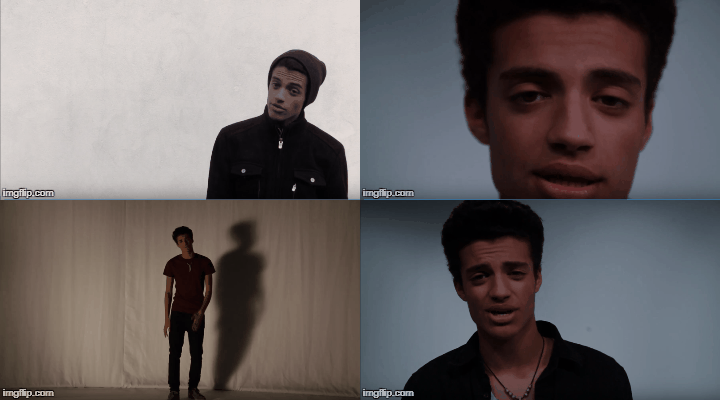

Andrew Goodwin's theory suggests that there should be some link between a songs lyrics and the visuals that accompany it in the music video. We decided to take on and apply this theory in our music video by matching up some of our lyrics to character actions, such as when AJ's girlfriend leaves the room (leaving AJ alone and confused), the line "Why did you leave me all alone?" plays.


   Our Website

Powered by emaze
Our Album Cover

Powered by emaze

In conclusion, we ensured our media product challenged, used and developed the forms and conventions of real media products by researching existing products from our chosen genre to see what the common trends were and in turn how to incorporate them successfully

Monday, 15 January 2018

Evaluation Question 2: How effective is the combination of your main product and ancillary texts?

I think our main product and ancillary texts work well together due to the use of a synergistic marketing campaign, inspired by existing artists as well as Richard Dyer's theory on star identity. We aimed to produce a music video, album cover and website which could combine to form a brand identity around AJ as well as increase the reach of the artist to our audiences, such as fans of the RnB genre.

Below is a prezi explaining the roles behind each of our artifacts (music video, album cover and website) as well as how we incorporated Dyer's theory into our marketing campaign:


In order to get some inspiration for our own artist's star identity, I decided to research Not3s and Raleigh Ritchie, with the latter sharing a similar persona to what we aimed to create with AJ and the former being an upon coming London artist- similar to AJ

The Website
The website acts as a sort of hub of the marketing campaign; this is due it how it is connected to all the media products relating to an artist as well as promoting all purchasing opportunities and overall showing off the artist in a positive light to anyone surfing the website. This is therefore what we aimed to create in our website and I believe we did manage to achieve this, as shown in some examples below:
"Get it here" option available on home page - instantly promoting the album
Music page with both the music video and the album- links the two and creates synergy
Our shop page providing purchasing opportunities for consumers in our audience
Our social media links which can be directly accessed form the website- interactivity between artist and audience
Tim O'Reilly's theory on Web 2.0 suggests that "A Web 2.0 website may allow users to interact and collaborate with each other in a social media dialogue as creators of user-generated content in a virtual community". In turn the benefits of an artist having a Web 2.0 website cannot be underestimated as it can help them reach the level level of stardom, as referenced in Richard Dyer's theory of star identity. We therefore tried to take advantage of Web 2.0 by creating multiple opportunities for our audience to interact such as links to social media, newsletter sign ups, a competition and a Q&A section.
Our news page showing off our opportunities for audience interaction
In conclusion, I think my main media product and ancillary texts work well together due to the high levels of synergy between each product as well as all the various opportunities for purchasing and interactivity. Overall, I think after taking into account Richard Dyers Star theory we were able to create a consistent brand across our music video, album cover and website which would serve well in giving AJ a star identity. 

Monday, 8 January 2018

Evaluation Question 3: What have you learned from your audience feedback?

Gathering audience feedback and reflecting on it has been a huge aspect of the process. It's had a key role in informing us on how to ensure that our media products are always tailoring to our target audience's needs. We received regular audience feedback throughout the production process on all 3 of our media products; all of which has been analysed below:


Our Audiences

Primary- Our primary target audience are fans of the R&B genre, both contemporary and old school


Secondary- Our secondary target audience are people in the age range of 12-25 as this is the biggest age demographic of music consumers. Moreover, as AJ falls into this age group he would be viewed as an inspirational and relatable role model
Tertiary- Our tertiary target audience are fans of similar and mixed genres such as hip hop as they share a similar style of music to what AJ makes


Music Video Feedback

We received feedback on our music video throughout the process, but also after constructing our rough cut. Below is a table summarising the feedback we received from the rough cut as well as the changes we made as a result of the feedback:


Throughout the process we would regularly show our progress to friends and family in order to get their opinions on it. This feedback was widely positive with everyone I asked loving it. People we asked especially loved our dance silhouette shots and the dance break, due to the ghosting effect. They felt the dance break was unique and overall the dance shots fit well in the contemporary R&B genre.

Upon finishing the construction of our music video we uploaded it to YouTube and created an online survey using Survey Monkey in order to get post-production feedback. The survey had a link to the uploaded version of the music video so anyone taking part in the survey had quick access. After this we sent out the following link to the survey, https://www.surveymonkey.co.uk/r/K5SLH62, to all our friends and family so we could get a wide range of answers; this covered both people within our core target audience group and people who wouldn't be considered within this category.

Below is some of our survey results:

Ages of people taking part in the survey
Genres people thought the music video was
Chart showing whether people would like to know more about the artist
Peoples rating of the music video out of 10
We also received some feedback from a small group of 17-18 year olds in the form a reaction video. We filmed them as they watched our music video and we then preceded to ask them questions based on what they thought of it. This can be see below:


Overall the feedback was positive with our music video's message and genre being easily identifiable to focus groups and people who took the survey.

Website Feedback

As producing a website was relatively new to all of us it was essential we received constant feedback. Many of the people I asked to comment on the website really liked the layout of the home page due to its ability to easily access the rest of the features on the website, such as tour information and the shop.
Below is a filmed reaction of two of our target audience members to our website:


Overall the feedback on our website was positive with one of the most positive comments being how professional it looked. This was massive for us as it showed to us that the website seemed authentic and therefore would not look out of place in the real life music industry.

Album Cover Feedback

As was with the website, producing an album cover was new to all of us so again feedback was greatly appreciated throughout. We never really had any issues whilst constructing each panel of the album cover apart from having to change ideas on our outside back panel. This was because the idea we initially intended to construct did not come out as intended. Below you can see the initial outside back cover attempt: 
Our attempt at layering photos into one image
Below is a filmed reaction of two of our target audience members to our album cover:


Overall, the process of getting audience feedback was essential to producing a more refined and popular final product. It enabled us to meet our target audiences needs and tailor our products to ensure they would be appealing and also meet the criteria of the R&B genre

Monday, 1 January 2018

Evaluation Question 4: How did you use new media technologies in the construction, research, planning and evaluation stages?

I used a vast range of media technologies during the three processes of  Research and Planning, Construction and Evaluation.
Research and Planning

Below is a mind map of the technologies I used during the research and planning stage of the project:


Construction

Below is a padlet I created to break down the technologies we used during the construction (both production and post-production) stage along with their Pros and Cons:

Made with Padletd

Evaluation

I used a wide range of technologies when completing my evaluation. Below is an Emaze detailing them along with their Pros and Cons.

Powered by emaze
In conclusion, over the course of this media project we have all had access to some amazing, high quality technology which were essential to producing professional products which would not look out of place in the industry. The proliferation of all the newer technology, such as Web 2.0, has not only provided us with this opportunity to produce these high quality products but has allowed us to have fun at the same time due to the ease of use and ability to easily communicate and adapt.

Sunday, 24 December 2017

Construction Post 6: Website Post-Production

To create and design our artist's website we used 'Wix'. Although no one in the group had any previous experience with using 'Wix' before, it was relatively easy to get the hang of so by the end of the project we were all comfortable using it; a key factor behind how much progress each member made when working individually on the website.
The gallery page

As an artist's website is the hub of all the information a consumer needs to know about the artist. Therefore we needed to create an interactive and cohesive website which also had synergy with our other artifacts (the music video and digipak). We also wanted to create purchasing opportunities for our artist's audience as this is proven to be successful with existing artists when it comes to increasing audience interaction.

My personal contribution to the website included setting up the shop and editing the products on sale, producing the gallery page, setting up both the social media pages and creating the tour poster.

The tour poster for AJ

Construction Post 5: Digipak Post-Production

To create our Digipak album cover we used Adobe Photoshop. Below is the template we used for the front and back outside panels. A similar template was used for the inside panels too.
Outside panels template
As mentioned in the previous post my group made the decision to share the responsibility of all the products. However, as I had the most experience in Photoshop and was most comfortable on it I took the lead on the last week and therefore had quite a big contribution to the final design. I produced both the inside covers and made the finishing touches to the front covers, I also produced the spine and the institutional information on the back cover.

Overall, I am extremely pleased with what my group achieved with the Digipak as it met our intended targets and expectations.

Below is the finished product:

Inside album cover

Outside album cover

Construction Post 4: Music Video Post-production

Editing

We edited our music video using software called Adobe Premiere Pro, which we used both last year and at GCSE. Due to having used this software previously I was quite experienced and therefore felt confident thought the process.

Myself editing the music video
The first step we took was to watch through all our takes and rename them so they would be easy to identify when placing them on the sequence timeline. We then proceeded to choose the best take for each shot and place these on different tracks; if the shot was a lip-sync shot then we synced it up to the original Cry Me A River soundtrack. The purpose of this was to have every lip-cync ready at our disposable when it came to actually putting the video together.

In order to finish all three of our artifacts in time we decided, as a group, that the best course of action was for the group to share responsibility for each product. Even though we all worked on each product, the group made a decision that on the last week each member should focus on the product they work the fastest on as this would give us the best chance of finishing in time. In the last week Sian took more responsibility for the music video edit so therefore my main contributions came within the 1st half of the video, grading decisions, lip-sync matches and shot transitions.

Sunday, 17 December 2017

Construction Post 3: Week 3 Production

The sole aim of week 3 was our promo photo shoot which we carried out on a set in our school's media department. The set-up we used can be seen below:


Our photo shoot was very successful as we not only managed to get all the photos we needed for the digipak covers but also a lot of other promo shots which we placed on the website and our two social media platforms. As I took on the character of AJ I was required to be in front of the camera, whilst Meera and Sian switched between the roles of director and photographer as the week went on. I really enjoyed the whole process as it was fun to experiment with my character, moreover as the main aim of the promo shots was to portray the personality of AJ (which is quite similar to mine, i.e. goofy) I was able to have fun on set with my group whilst still taking high quality pictures which we could use across all the different platforms of our project.

Below are some of my favorite promo shots from the photo shoots:


Construction Post 2: Week 2 Production

The second week of production was our main shoot week. We spent the majority of the week in the school studio, with the Sunday being spent on location.

To keep on track we created a schedule which showed us who would be in the studio at any one point. This was very useful when creating the individual shoot schedules for each day as we could easily see who would be available at certain points. It also enabled us to create a call sheet with our actors as we could match up our schedule to theirs and find times when were all free to film.

Our group schedule for the week

Studio Shoot
Monday's Shoot Schedule
Above is an example of one of our shoot schedules which we made to help out with the studio shoots. As a whole this shoot was quite successful as we managed to get all of the footage which we wanted to get, however they were some big obstacles we had to overcome throughout the week, all of which are listed below:
  • On the Monday we had to work on the background in order to turn it into an infinity curve, this provided many complications as the actual process of sticking A3 and A4 paper to the parting took all the morning, however after recording some footage with this infinity curve we discovered that the idea didn't work as our lighting was too dark and therefore made the background look a bit off. Overall, this process put us behind schedule but in order to ensure this time wasn't wasted we brought in the male dancers and had them rehearse their routine with Meera whilst myself and Sian tightened the Cyclorama
    The monitor showing the attempted infinity curve
  • On the Tuesday we really face any issues and in fact we actually made up a lot of the lost time from the previous day
  • On the Wednesday we were having some difficulties with the camera; it wouldn't read the SD card and therefore wouldn't allow us to capture any footage. Fortunately for us, our teachers and technician managed to find a nearby repair shop who could fix the camera fault and have it fully functioning by the next morning. Our replacement camera, a Canon Legria HFG30 (our camera for location shoots), was available for use at this point however the difference in quality between it and our studio camera, Canon 5D MK 11, was huge and in turn did not work with the lighting we sorted out in the test shoot. As we did on the Monday we decided that instead of wasting our time we should sped the time rehearsing; I learnt the group routine and a selection of moves for my solo dances
My dance rehearsal

Construction Post 1: Week 1 Production

For the first week of production our group focused on preparing and carrying out the first location shoot. This shoot took place over one weekend with one night-time shoot on the Saturday and an all day shoot throughout the Sunday. The footage we captured over these shoots consisted of promo shots, filler shots, lip-syncs and rehearsals for narrative shots which were scheduled for the following weekend.

Saturday

First page of our shoot board for Saturday
Our first location for the Saturday shoot was at an old fashioned lamp post near Sian's house. As the shots we wanted at this location were filler shots and lip-syncs my role was solely on performing. Sian took on the role of cameraman and Meera directed. The shots we planned to film differed between hand held shots and tripod shots as we wanted more variety and creativity when editing. However, after filming the tripod shots in a CU we decided to scrap using the tripod at the location and instead capture a lot more hand held footage; we felt that the tripod made the shots too static and therefore boring, in contrast we felt the hand held shots brought the scenes to life whilst also allowing us to film in multiple angles and framing within each take.

Meera giving me direction between takes
The second location we filmed at on the Saturday was on the road by Sian's house, we decided to keep all of the roles within the group the same for these shots. For this location we wanted to mix up the shot types by adding character movement with camera movement; we achieved this with a tracking shot of me walking down the street lip-syncing to the camera. We particularly liked the lighting at this location and in turn decided to film some filler shots, as you can see below. The lighting form the street lamps gave an outline to my head in a LS and added a shadow to half of my face in a MS. 
A filler shot with back lighting from the street lamp

Sunday

First page of our shoot board for Sunday
On the Sunday our main location was in and around Meera's house, i.e. her back alley, her living room, her attic and staircase. Our aim for the day was to take a selection of promo shots, primarily our back cover for the digipak, film our rehearsals for narrative shots and capture the rest of my lip-syncs so that only studio lip-syncs remained. As I was required to be in every shot, Meera and Sian split the filming and directing and switched throughout the day. Due to myself taking on the main role of AJ I felt a lot of pressure to give a convincing performance, however Sian and Meera was great and gave help motivate me throughout the day to keep me on track.

Meera filming one of my outdoor lip-syncs
Once we had finished with capturing all of our lip-sync footage and promo shots that we had scheduled in for the day we decided to practice some of our narrative shots for the coming weekend. As well as practicing and experimenting with framing for the couple shots of myself and Sian we decided to script the argument scene between me and Sian; we believed this would be great preparation for Sian and I as we would be able to learn our lines.

The script for the argument
Overall, I think we had a successful first shoot weekend as we managed to film all the shots we wanted and manged to get in great preparation for the coming week. Some of the shots we filmed on the weekend actually became some of my favorites in the final edit and I believe as a group we worked very well- a great confidence booster for the stressful studio shoot week.


Friday, 10 November 2017

R+P Post 33: Reflections on my role and contribution during Research and Planning

Overall I am very happy about what my group has manged to accomplish within this research and planning period. We have all worked well together as a team with Sian and Meera both contributing significantly to this project.

During Research and planning this is what I contributed:

Test shoot- Filming
  • I took on the role of 'AJ'- the artist of the music video
  • I encouraged and gave feedback to Meera and Sian whilst they danced
  • I was constantly rehearsing my dancing in preparation for the main shoot
  • I helped create the lighting set-ups
  • I sorted out the background, i.e. the backing curtain, so it worked well with our lighting and had no visible creases on camera
Me (centre) learning a dance routine
Me performing one of my lip sync shots


Test shoot- Editing
  • As I have a lot of experience in editing from past projects I took more responsibility for this edit
  • I helped organise the shots onto the timeline and then sync them up to the main audio track
  • I helped bring in members of our year to watch our edit- audience feedback
Me and Sian editing
Story boarding
  • As I spent the majority of our planning time learning how to dance and practicing my lip sync I did not have much of an opportunity to help with the timeline, however I was able to plan out our key storyboard shots and then organise them into categories
  • This again was a process I was familiar
All in all, what my group has accomplished so far has been to a very high standard and we have definitely had a lot of fun along the way. I can't wait to see how we progress through the construction stage.

R+P Post 32: Test shoot and rough edit

Our rough cut from our test shoot:


This rough cut was made from our test shoot footage and was therefore very helpful is judging whether our ideas worked well and how we could the adapt them to improve the overall flow and look of the music video.

Overall, the test shoot was a huge learning curve for us as this was the first time we were given full access to the equipment within the studio. This meant is was very useful to us as we wanted to be as prepared as possible when it came to filming our main shoot. The main thing we wanted to experiment with during this shoot was the lighting desk as we had some rather complex ideas that we needed to see. These included 'flicker' effects, strobe lighting and a screen with shadows.

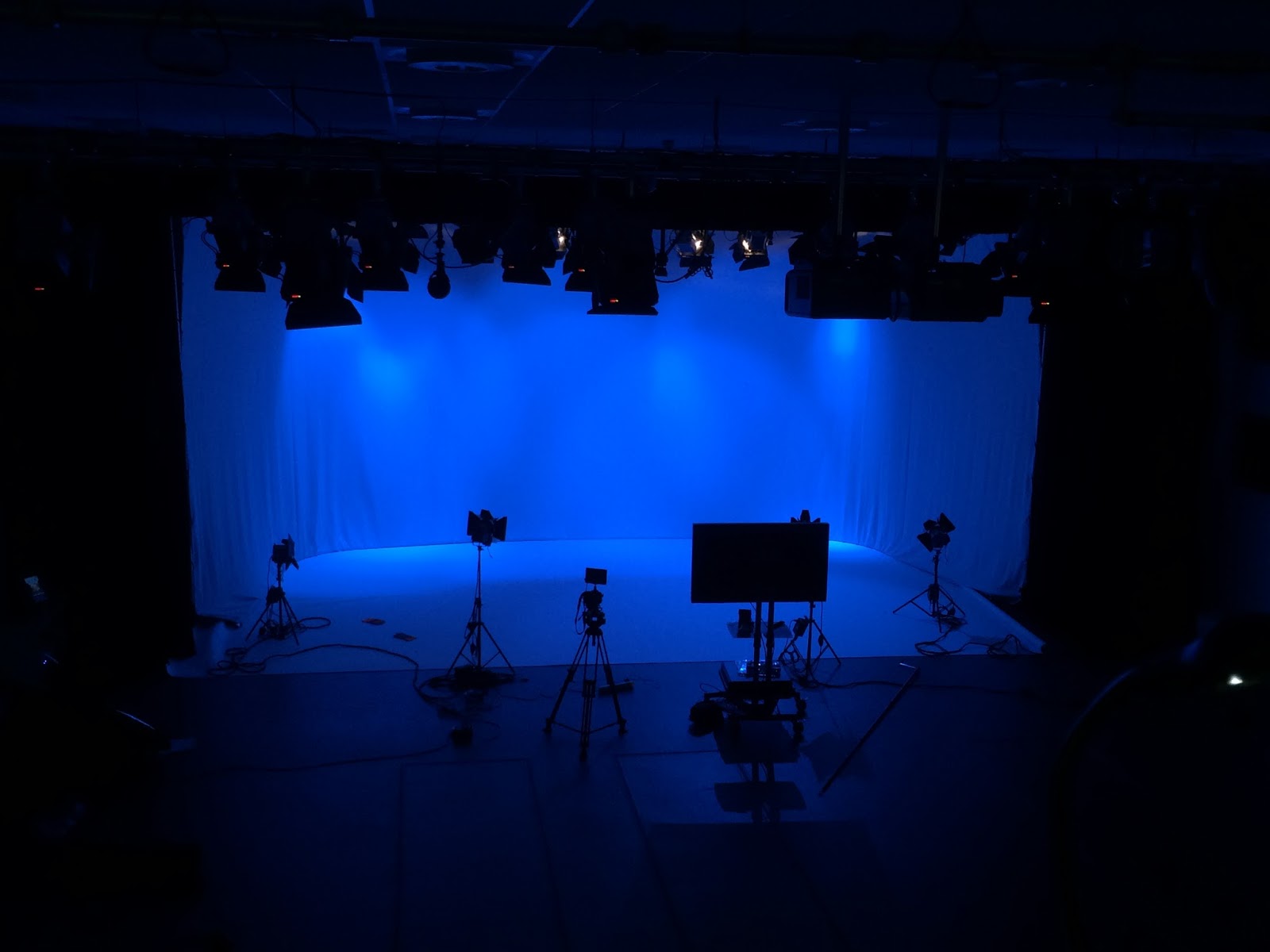
Our blue lighting set-up
However, the lighting set-up we were most impressed with was the dark blue silhouette lighting for the dancers. We thought this looked really professional and cool and definitely fitted the look we were going for; it worked really well when Meera went through her routine and in turn influenced us to have Sian now have a routine with the lighting.

R+P Post 31: My call sheet

To help make sure that all of our actors and crew turned up on time, we created call sheets; these were given out to all the crew and all of our actors. Each sheet shows clearly at what time each actor needs to be on set and all the health&safety details they require, such as fire exits and a risk assessment.
Call Sheet for the Monday shoot (in school/studio)

Sunday, 29 October 2017

R+P Post 30: My Shootboard

To ensure that each of our shoot days ran smoothly and efficiently we made shoot boards. These contained details, such as the shot description, shot number, time available for the shot and the cast/crew required for the shot.

Below is a sample of one of our shoot boards:

Saturday Shoot board page 1 
Saturday Shoot board page 2
Saturday Shoot board page 3
The shoot boards also contain visuals from the storyboard which help bring to life our intended shots, thus making it easier on the day to envisage what we want from each shot. Moreover, as they came directly from our storyboard, each picture to the key, i.e. orange note is a close-up, whereas a green background is a long shot. This is very helpful when positioning the actors and framing the shots.

In the set-up column we have also left a good amount of room for us to note down which we thought was the best take so when editing we could located the shots we wanted more efficiently.

R+P Post 29: Rehearsals

To help prepare for our shoot weeks we made a schedule for rehearsals so when it came to filming we could use our allocated time as efficiently as possible, this table can be seen below:

Rehearsal schedule
As this song relies heavily on the emotion of the main singer, we thought it would be best to have a screen test to see how comfortable I was on camera and then to point out any negatives which we could then reflect on and work on. Our screen test can be seen below:


From this screen test we identified that my lip sync was not very authentic so we brought in one of our friends, Tyra, who is a drama student to help work on my annunciations and thus make my performance more believable.

As the majority of our male dancers did not have much dancing background, regular rehearsals with them were essential. In these sessions we worked on routines choreographed by Sian and Meera (who are dancers). 
One of our dance rehearsals, lead by Sian (right)